Concrete vs. Pavers: Understanding Your Options
When it comes to upgrading your driveway or patio in Springfield, homeowners face a fundamental choice between two popular materials: concrete and pavers. Both options have earned their place in residential landscaping, but they serve different needs, budgets, and aesthetic preferences. Understanding the key differences between these materials is the first step toward making a decision that will serve your home well for years to come.
Concrete Driveways offer a clean, modern look with a smooth, uniform surface. Traditional poured concrete has been the go-to choice for decades, prized for its simplicity and durability. Pavers, on the other hand, are individual units (typically made from concrete, brick, or stone) that are laid in patterns to create a finished surface. Each approach brings distinct advantages and considerations that depend on your specific needs, climate conditions, and long-term maintenance preferences.
Durability and Lifespan: How Long Will Your Investment Last
One of the most important factors homeowners consider is how long their driveway or patio will last. In the Springfield climate, where freeze-thaw cycles occur regularly during winter months, durability becomes even more critical. A properly installed concrete driveway can last 25 to 40 years with routine maintenance, while paver installations typically offer a similar lifespan of 25 to 50 years depending on the quality of materials and installation. However, the way these materials age differs significantly.
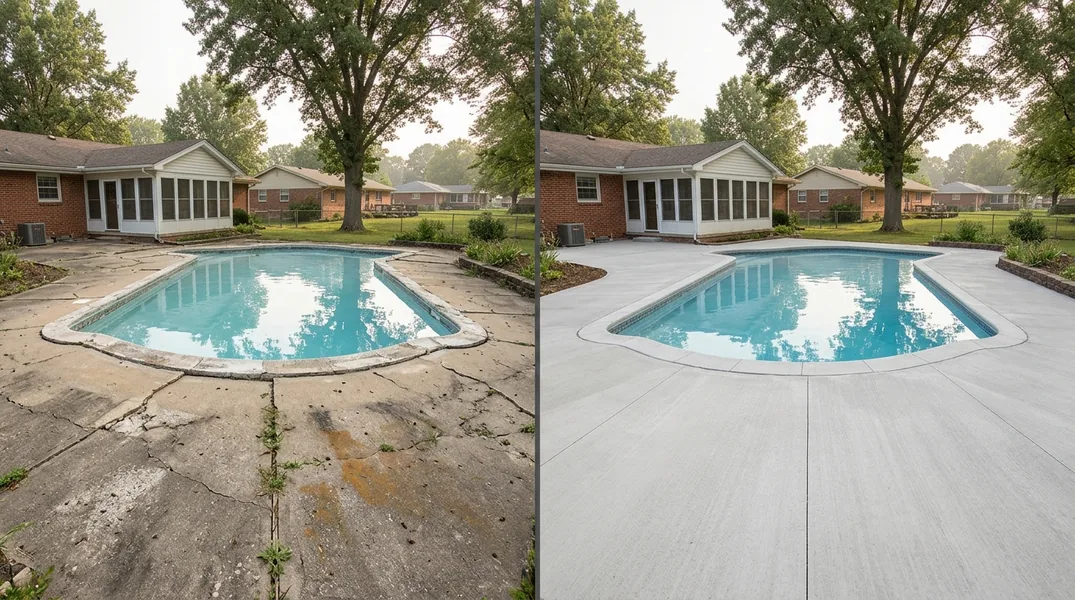
Concrete surfaces can develop cracks over time due to the expansion and contraction caused by temperature changes. While minor cracks are often cosmetic, larger ones may eventually require Concrete Repair and Resurfacing to maintain the structural integrity of your driveway. Pavers, by contrast, can shift or settle individually, which means you can replace a single damaged paver without affecting the entire surface. This modularity is one of their key advantages, though it requires more frequent maintenance to keep joints stable and level. The choice between these two often comes down to whether you prefer a monolithic surface that ages gradually or an interlocking system where individual components can be replaced as needed.
Maintenance Requirements: What You'll Need to Do
Maintenance is where concrete and pavers diverge most noticeably. Concrete driveways require sealing every two to three years to protect against water infiltration, UV damage, and salt used on winter roads. Regular sweeping and occasional pressure washing keep the surface clean and prevent staining. Most homeowners find concrete maintenance straightforward and manageable, making it an attractive option for those who prefer a low-fuss approach to their outdoor spaces.
Pavers demand more hands-on attention. The joints between pavers accumulate dirt, sand, and debris over time and require periodic weeding and cleaning. You'll need to re-sand the joints every few years to maintain proper drainage and prevent weed growth. Additionally, pavers should be sealed every one to two years to protect against staining and weather damage. While this higher maintenance schedule isn't necessarily a dealbreaker, it's important to factor into your decision if you prefer minimal upkeep. For homeowners in Springfield who want a beautiful outdoor space without constant attention, concrete often proves more practical.
Cost Comparison: Concrete vs. Pavers for Springfield Driveways
Budget is frequently the deciding factor for homeowners, and understanding the true cost of each option is essential. When comparing pricing, concrete driveways generally have a lower upfront cost, typically ranging from $4 to $8 per square foot for standard installations. Pavers usually fall in the $8 to $15 per square foot range, making them a more significant initial investment. For a 500-square-foot driveway, you might spend $2,000 to $4,000 for concrete versus $4,000 to $7,500 for pavers.
However, the initial price tag tells only part of the story. When you factor in long-term maintenance costs, the gap narrows considerably. Concrete requires periodic sealing and occasional repairs, while pavers need more frequent maintenance, joint replacement, and selective paver replacement over time. Additionally, if you decide to upgrade your outdoor aesthetic later, Stamped and Decorative Concrete options can provide high-end visual appeal at a mid-range price point, offering a middle ground between basic concrete and pavers. To get an accurate estimate for your specific project, Springfield Concrete recommends requesting a free estimate so you can compare costs side by side.
Aesthetic Appeal and Design Flexibility
The visual impact of your driveway or Concrete Patios contributes significantly to your home's curb appeal. Pavers excel in design flexibility, offering countless color combinations, patterns, and textures. You can create herringbone, basket weave, running bond, or circular patterns that add personality and sophistication to your outdoor space. This variety makes pavers particularly appealing to homeowners who want their driveways and patios to serve as design focal points.
Concrete doesn't have to be plain and gray, however. Modern concrete finishes include stamped patterns that mimic stone, brick, or slate, as well as colored concrete options that can complement your home's exterior. While concrete offers fewer design possibilities than pavers, it provides a cleaner, more contemporary aesthetic that many homeowners prefer. The choice often depends on your home's architectural style and your personal preference for either a bold, patterned look or a streamlined, modern appearance.
Climate Considerations: What Works Best in Springfield
Springfield's climate presents specific challenges for any driveway or patio material. The region experiences significant temperature fluctuations, with cold winters that can drop well below freezing and warm summers. This freeze-thaw cycle is particularly hard on outdoor surfaces. Both concrete and pavers can handle these conditions when properly installed and maintained, but each has slightly different vulnerabilities. Concrete can crack when water seeps into small fissures and freezes, expanding and putting pressure on the surface. Pavers handle freeze-thaw cycles well individually, but the sand and gravel base underneath can shift, potentially causing uneven surfaces over time.
The use of road salt during winter months also affects both materials. Salt can damage concrete by causing spalling (surface deterioration) and can stain pavers. Proper sealing and prompt cleaning of salt residue help both materials withstand this challenge. If you're uncertain which option would perform best for your specific location or if you want professional advice tailored to your property's conditions, Springfield Concrete's team can provide expert guidance. Call (217) 718-3253 today to discuss how either material would perform in your particular situation.
Making Your Final Decision: Concrete or Pavers
Choosing between concrete and pavers ultimately depends on balancing several factors: your budget, maintenance preferences, desired aesthetic, and long-term plans for your property. If you prioritize lower upfront costs, minimal maintenance, and a clean modern look, concrete is the practical choice. If you're willing to invest more initially and perform regular maintenance in exchange for design flexibility and the ability to replace individual components, pavers may be worth the investment.
The good news is that you don't have to make this decision alone. Springfield Concrete has served homeowners throughout the region with expert installation and honest guidance for years. Whether you're leaning toward a traditional concrete driveway or considering pavers for your patio, our team can help you understand the pros and cons specific to your project. Contact Springfield Concrete at (217) 718-3253 or visit our website to request a free estimate and discuss which option best fits your home, budget, and lifestyle.
Looking for a professional concrete contractor in Springfield? Springfield Concrete responds fast for all your concrete needs.
Get a Free QuoteOur services: Concrete Driveways · Concrete Patios · Stamped & Decorative Concrete